Learn step by step how license plate recognition handles resident, visitor and unauthorized vehicle scenarios at residential sites, plus installation steps and GDPR compliance.
The most common problem at residential entrances is that vehicle access cannot be managed safely and fairly. With classic card or remote-based systems, cards get lost, get shared across multiple vehicles, visitor vehicles go unrecorded and the parking area eventually fills up unfairly. License plate recognition removes most of these problems by using the vehicle itself as the identity.
Why Is License Plate Recognition Needed at Residential Sites?
- No card or remote to lose, because no physical credential is required
- Visitor vehicles are logged with a timestamp
- Unauthorized entry attempts trigger an automatic alert
- A per-apartment vehicle limit can be enforced automatically
How Does It Work Step by Step at a Residential Site?
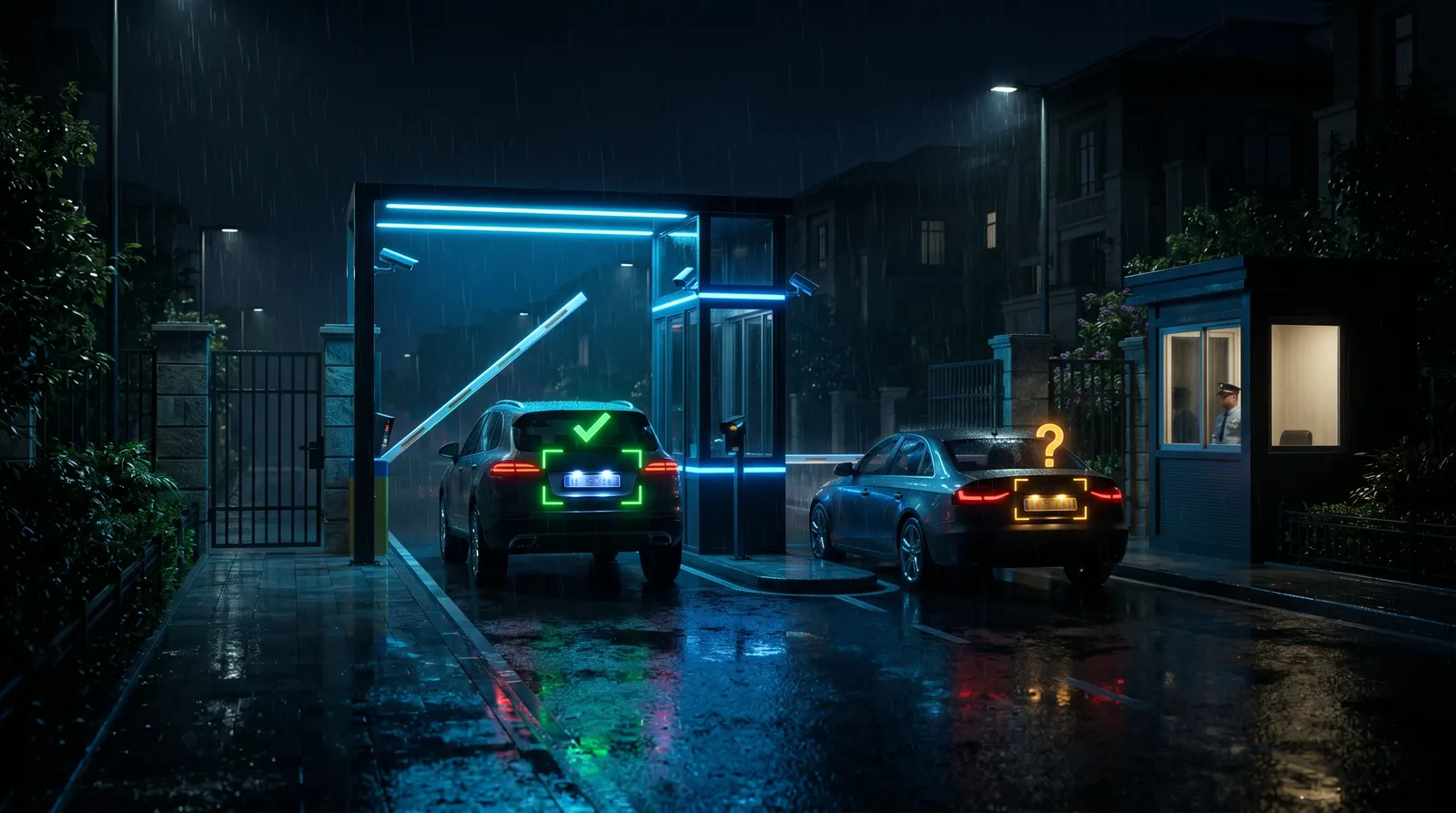
The system processes the image from the entrance camera and produces a decision within seconds. That decision follows a different path depending on whether the vehicle is a resident, a visitor or unauthorized.
Resident Vehicle Entry
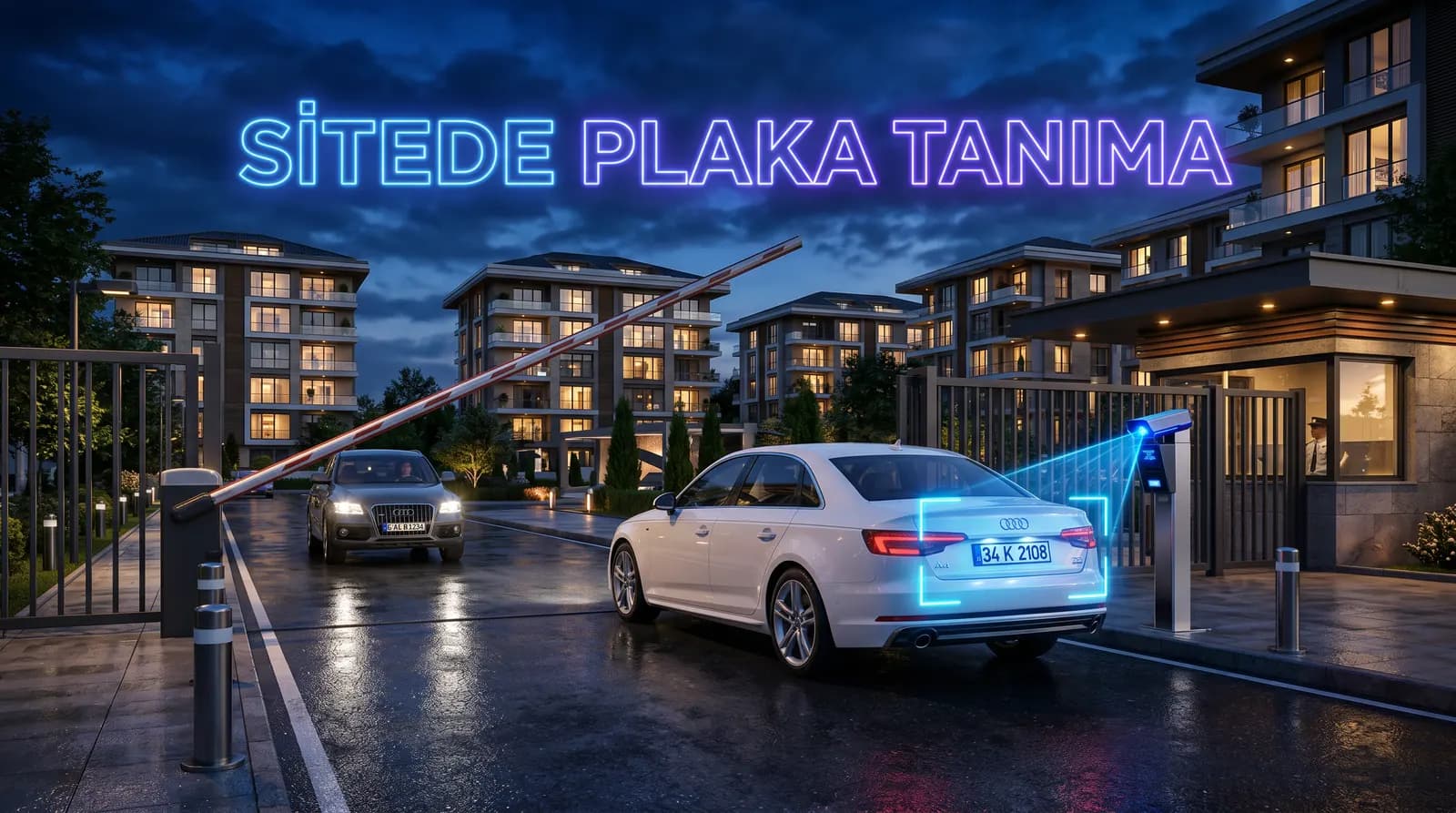
Each resident's plate is registered in advance. When the vehicle approaches the entrance, the camera reads the plate, the software compares it against the authorized list and, if it matches, the barrier opens automatically. The resident passes without swiping a card or using a remote, a clear improvement over classic systems in both speed and convenience.
Visitor Vehicle Management
Visitor vehicles can be managed in two ways:
- Pre-registration: the resident adds the visitor's plate in advance through the management panel or app; when the visitor arrives, the barrier opens automatically
- On-site registration: when the visitor arrives, the operator enters the plate and grants a specific duration or a single-pass right
A well-designed system timestamps every visitor pass, so which apartment authorized which visitor and when can be checked retroactively.
Unauthorized Vehicle Detection
When an unregistered plate arrives, the following happens:
- The barrier does not open and the vehicle is not allowed through
- An instant alert is sent to the operator or security staff
- An image of the vehicle is logged with the event
- An optional warning message can be shown on the LED panel
Parking Occupancy and Per-Apartment Limits
Site management often wants to cap the number of vehicles per apartment, otherwise a few apartments can occupy most of the parking. The system can track how many vehicles from each apartment are currently parked. When the defined limit is reached, a new entry for the same apartment is blocked and this is shown on the LED panel or operator screen. This is a fairness feature that is nearly impossible to enforce with classic card systems.
Components Required for Installation
- License plate recognition software: supports resident, visitor and unauthorized-vehicle management, parking limits and reporting
- IP cameras: separate cameras for entry and exit, with night vision and wide dynamic range (WDR)
- Barrier and loop detector: for automatic opening and safe closing until the vehicle has passed
- LED information panel: shows a welcome message to residents, approval to visitors and a warning to unauthorized vehicles
- Operator panel: for managing visitor entries and manual interventions, optional but recommended
How Does the Installation Process Work?
- Site survey: number of entry/exit points, camera placement and existing barrier compatibility are assessed on site
- Hardware mounting: camera, barrier, loop detector and LED panel, if used, are installed to match site conditions
- Software setup: the software is installed on a Windows device and cameras are configured
- Resident list entry: all resident plates and apartment mappings are entered into the system
- Limit and rule definition: the per-apartment vehicle limit and any exception rules are set
- Pilot test: the system runs with real traffic for a limited period; unread plates are classified by cause such as angle, dirt or lighting
- Go-live and training: management and security staff are trained on the software
For a typical site, this entire process can take anywhere from a few days to about a week depending on the site's size.
GDPR and Data Security
Plate data processed for site access control can be personal data when it can be linked to an identifiable person. This section is not legal advice; each property's data controller should assess its own specific situation. General points to consider:
- The data controller is typically the site or building management
- Retention periods should be justified, limited and reviewed regularly
- Records past the retention period should be cleaned up automatically
- Only staff who need access for their duties should be able to view logs
- Data should not be transferred to third parties; an offline system is preferable where possible
Systems that run entirely on-device, like PlakaNet, do not send footage to the cloud, which makes it easier for the site to keep data control in its own hands.
Frequently Asked Questions
Will this work with my existing barrier?
It is compatible with most modern barriers, but this depends on the barrier's control unit and connection method. The trigger input and the supported HTTP/TCP or relay interface should be verified during the site survey.
Does the system keep working if the internet goes down?
With an on-device architecture, plate reading, decision-making and barrier triggering can continue locally. A separate outage plan should still be tested for the power supply and network switch.
Do visitors need a special app?
No, it is not required. A visitor's plate can be entered through the management panel or by an operator on site; both methods keep a timestamped record.
How is the parking limit enforced?
The allowed number of vehicles per apartment is configured in the system. It counts how many vehicles from each apartment are currently parked and blocks new entries once the limit is reached.
Is this system GDPR compliant?
Compliance becomes easier when it is combined with a proper retention period, restricted access and a deletion policy. The final assessment, however, belongs to the property's own data controller and legal advisor.
Conclusion
License plate recognition at a residential site is more than hardware that opens a barrier automatically. It is a complete system that manages resident, visitor and unauthorized-vehicle scenarios separately, makes parking use fair and keeps access records traceable. When making an installation decision, weighing camera placement, barrier compatibility, data-retention policy and the parking-limit feature together gives the most reliable long-term result.
Related solution: Residential & Apartment Plate Recognition System