For integrators and security dealers running camera and barrier projects: how to add a license plate recognition software layer, how the partner model works, and how to position it to customers.
If you're a system integrator, security dealer or electrical contractor installing cameras, barriers or access control, you've probably run into a familiar problem: hardware installation alone is getting more price-competitive and lower-margin every year. This guide explains how adding a licensed license plate recognition (LPR) software layer to your existing projects can differentiate your offer, which project types it fits, and exactly how PlakaNet's partner model works.
Why Now? The Software-Layer Opportunity for Security Integrators
Industry data points in one direction: among the largest security integrators, recurring/higher-margin revenue (managed services, software, support) grew notably year over year; industry sources attribute this to higher margins and longer customer relationships compared with one-off installation projects. At the same time, demand for systems that process on the edge/on-premise — rather than in the cloud — is growing fast, because organizations don't want to give up control of their data.
These two trends meet at the same point for integrators: adding a locally-processing (offline) AI software layer to your existing hardware installation business creates both differentiation and higher value per project.
The Problem: Hardware Installation Alone Doesn't Leave Enough Margin
Camera, barrier and panel hardware has largely become commoditized — the same brands, at similar prices, sold by many firms. Bidding processes often come down to price, which compresses margin. Differentiation increasingly comes not from "cheaper installation" but from adding a project-specific capability your competitors don't offer.
The Solution: Add a Licensed Software Layer to Your Existing Projects
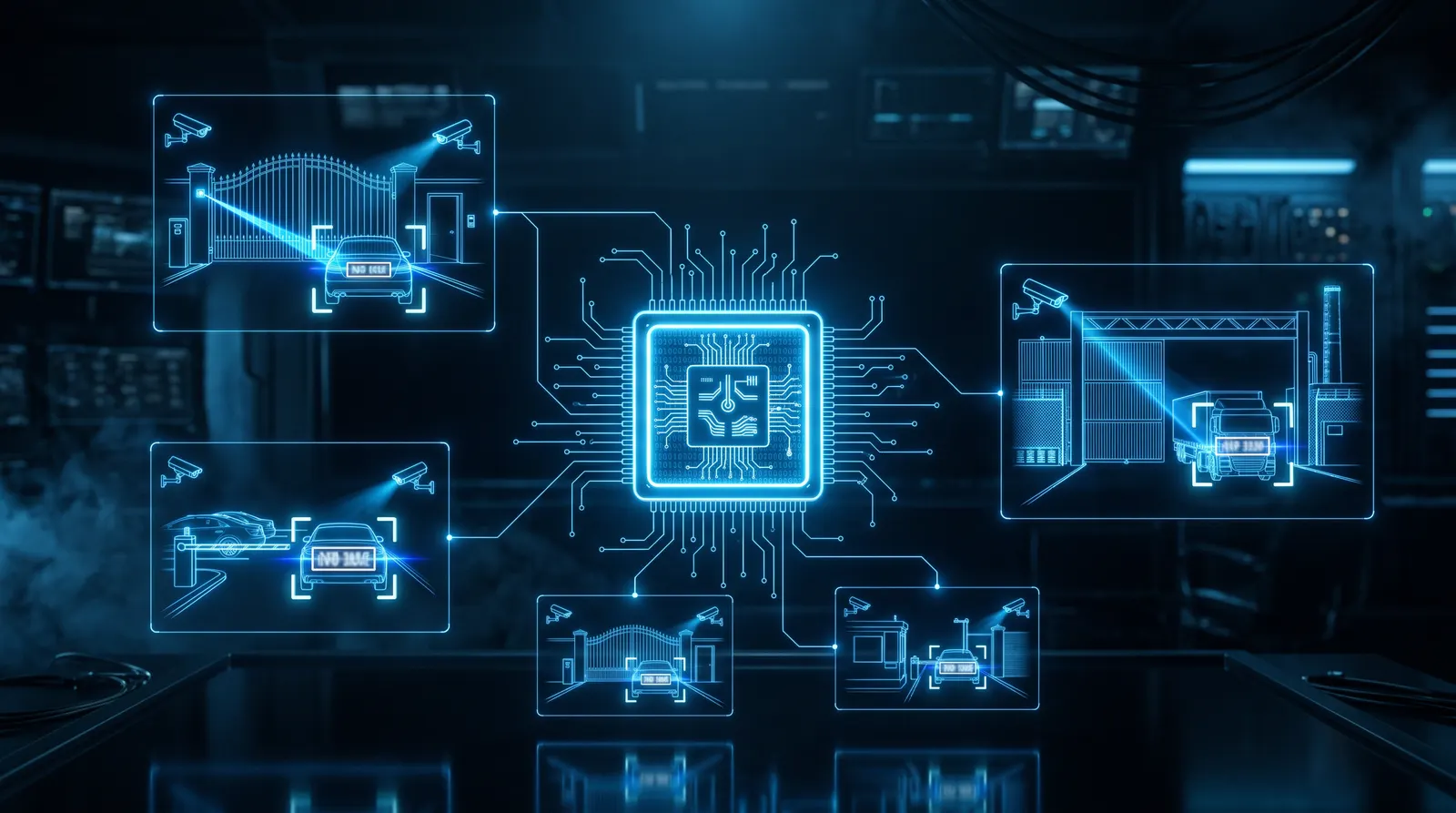
LPR software sits on top of the camera and barrier infrastructure you're already installing — it isn't a separate hardware line. Instead of selling your customer "a camera plus a barrier," you sell them "an automated, offline access control system." That adds a distinct software-license line item on top of the same hardware job, and a clear point of differentiation.
How to Add LPR to Your Project, Step by Step
1. Validate On-Site with a Demo/Test License
Before quoting, verify real-world accuracy under the customer's actual camera and lighting conditions using a demo/test license — in the field or your own test setup. This lets you (and the customer) decide without risk.
2. Connect the Barrier/Gate via the HTTP/TCP Integration Guide
Your existing or newly installed barrier, gate or turnstile connects to the LPR software over HTTP/TCP or relay. The integration documentation spells out exactly which device talks to which endpoint on site.
3. Quote at Your Reseller/Integrator Price
Each project is evaluated individually; you build your quote on top of the reseller/integrator price. The software license becomes a separate line item alongside your hardware and labor.
4. Commissioning and Remote Support
You manage the on-site installation; technical documentation and remote support cover the software side. Troubleshooting and tuning (camera placement, model selection) get finalized at this stage.
Which Project Types Fit?
- Barrier system projects: add an automatic plate-reading layer to existing or new barrier installations.
- IP camera security jobs: turn RTSP/HTTP camera projects into a plate recognition and logging solution.
- Access control modernization: upgrade card, remote or fully manual (guard/doorman) access flows to plate-based automation.
- Parking automation proposals: bundle tariff billing, reporting and licensed LPR into the same quote.
How to Position It to Customers
- Offline operation: images never leaving the device is a strong selling point on data protection grounds — especially against cloud-based competing bids.
- Predictable cost: a fixed term licence is easier for the customer to budget than a recurring monthly per-camera cloud fee; if a competing bid is cloud-subscription-based, this is a clear differentiator.
- On-site validation: a "see it work before you commit" approach via a demo/test license builds customer trust.
PlakaNet's Partner Model — Summary
- Project-based licensing: every project is evaluated individually; no rigid list price is imposed.
- Demo/test license: for on-site validation.
- Reseller/integrator pricing: a baseline you build your own margin on top of.
- HTTP/TCP integration documentation: a ready technical reference.
- Remote technical support and commissioning assistance: you run the on-site install, with support on the software side.
FAQ
Is there a monthly commission or recurring revenue-share program?
PlakaNet's published model is project-based licensing and reseller pricing; it isn't offered as a fixed-percentage, recurring monthly commission program. The value comes from the software line you add to the project and the margin you set yourself.
Do I sell it under my own brand?
You manage the on-site installation and the customer relationship, and can quote and present under your own company identity. Technical infrastructure and support are provided by PlakaNet.
What if I run into a technical issue?
Integration documentation and remote technical support are available through installation and troubleshooting.
Is there a minimum project size?
Evaluation is project-by-project; quotes are available from a single site entrance up to a multi-camera facility.
Conclusion
Hardware installation alone is turning into a tougher margin game every year; that's why integrators across the industry are moving toward a software/services layer. Adding a licensed, offline license plate recognition layer to your existing camera and barrier work gives your customer a concrete benefit — a compliant, predictably-priced, uninterrupted system — and gives you a project-specific point of differentiation.