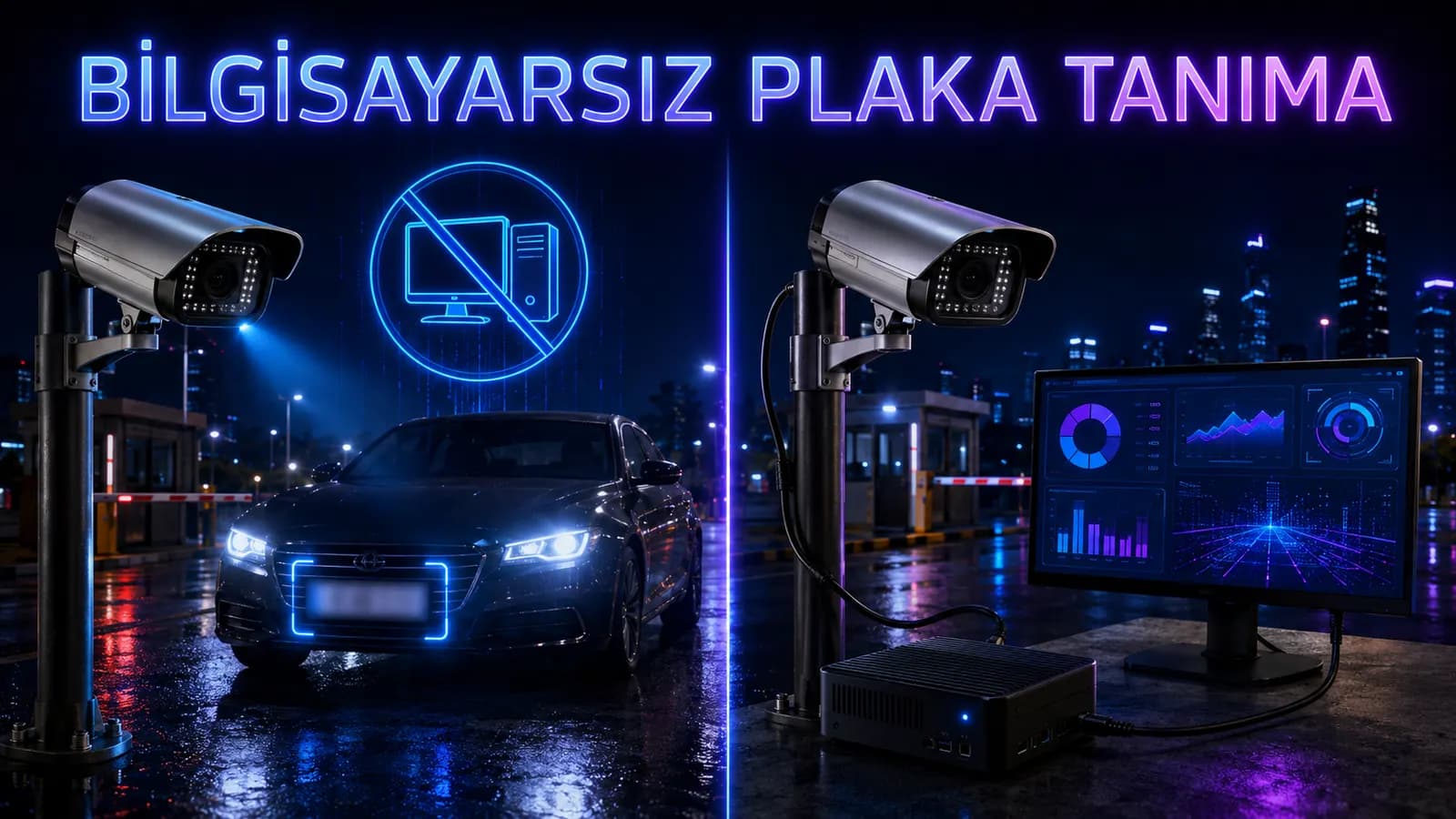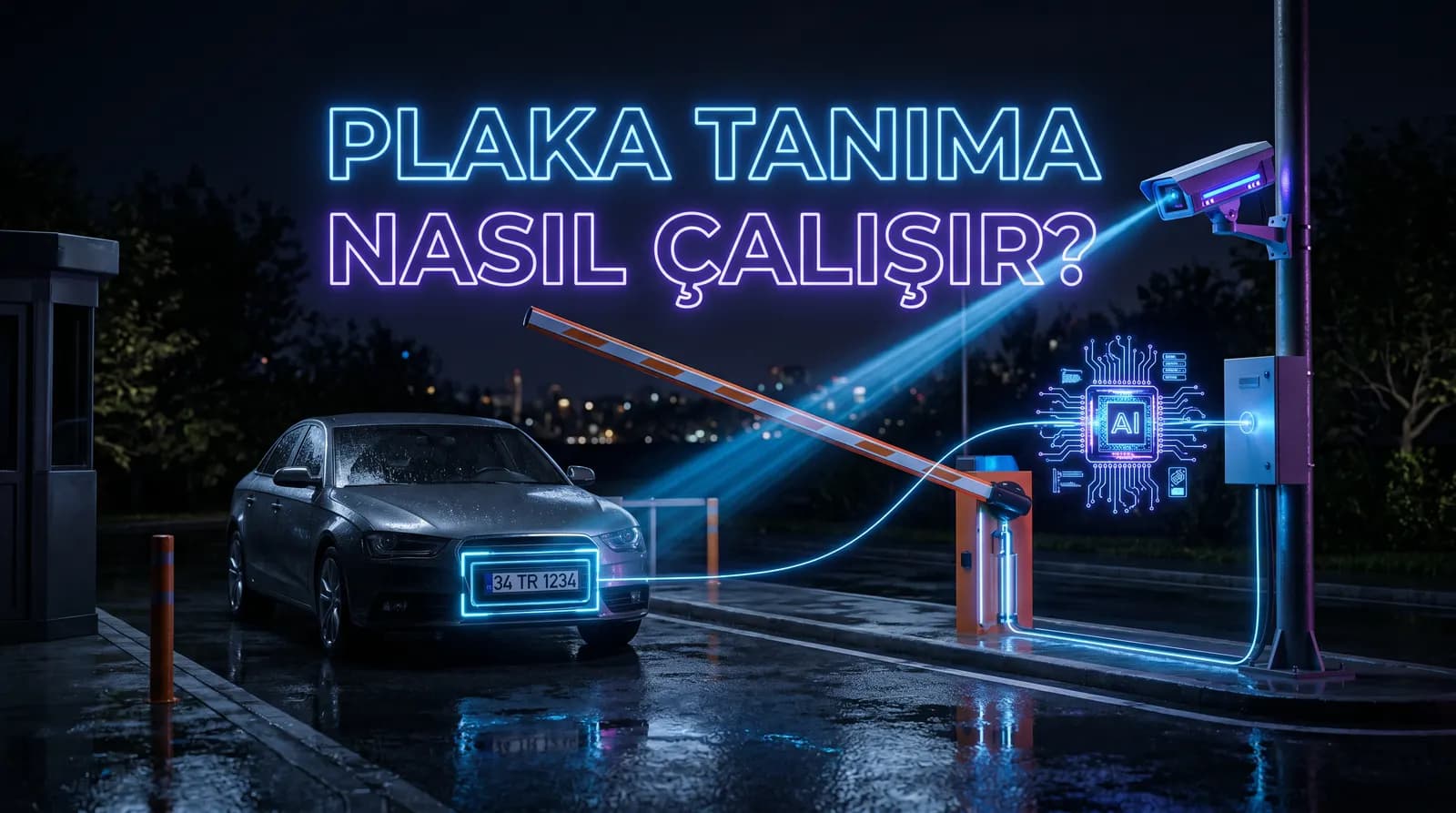
Learn how license plate recognition (LPR/ANPR) works step by step: AI detection, OCR reading, barrier integration and site/parking setup. Offline, GDPR-friendly PlakaNet guide.
License plate recognition (LPR), also known as ANPR (Automatic Number Plate Recognition), is a technology that automatically reads vehicle plates, records them and controls access. It has become standard at residential sites, parking lots, factories and campuses. This guide explains how an LPR system works, which technologies it uses and what to consider during installation.
What Is a License Plate Recognition System?
An LPR system captures a camera image, locates the plate, reads the characters (OCR), compares them with a database and — based on the result — opens a barrier, gate or turnstile. It eliminates manual card reading or button pressing.
Traditional systems required expensive dedicated hardware. Today, AI-based software runs on standard IP cameras, dramatically lowering cost.
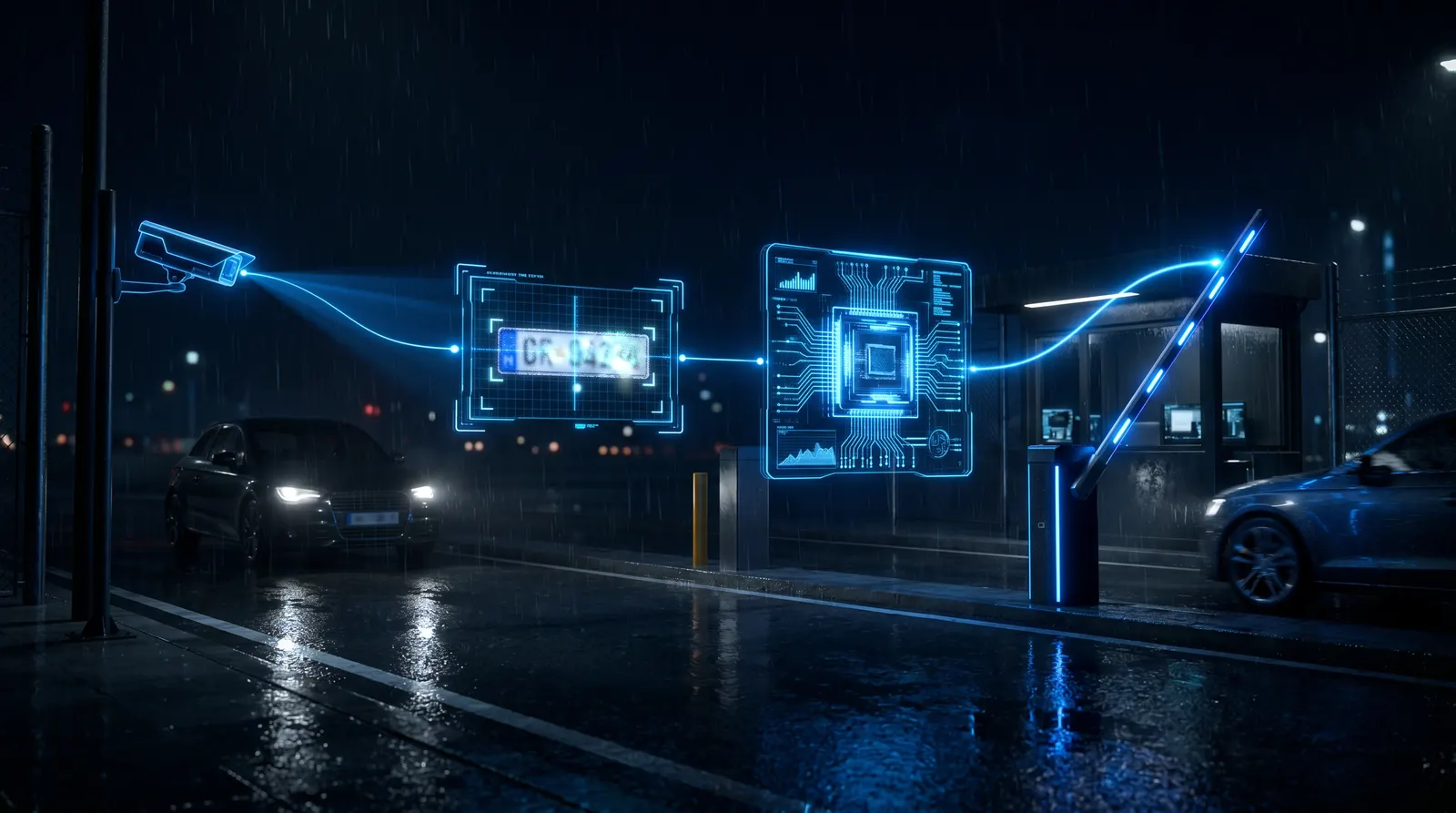
How LPR Works — Step by Step
A modern LPR system has 5 stages:
1. Image Capture (Camera)
An IP camera placed at the vehicle passage point sends frames to the software when motion or a loop detector triggers. Image quality directly affects accuracy, so IR-LED night-vision, high-resolution cameras are essential.
2. Plate Detection (AI / Deep Learning)
The software locates the plate within the image. Legacy systems used classic image processing; modern ones use deep learning models like YOLO. Deep learning handles shadows, angles, partial occlusion and low light with high accuracy.
3. Character Reading (OCR)
Once the plate is located, the OCR engine converts characters to text. Region-specific OCR engines parse the letter/number mix correctly, producing a standard string like "34 ABC 123". Modern OCR achieves over %99 accuracy.
4. Decision (Rule Engine)
The read plate is compared against the authorized-vehicle list and configured access rules:
- Authorized → barrier opens automatically.
- Unlisted → the property’s pre-defined procedure applies, such as an alert or operator review.
- Paid-parking event → the entry/exit event can feed the duration and tariff calculation flow.
5. Logging & Reporting
Each event is recorded with timestamp, camera ID and optional image. CSV/Excel reports cover shift totals, occupancy analysis and historical queries.
Factors Affecting LPR Accuracy
- Camera positioning: perpendicular to plate, less than 30° off the vehicle axis.
- Lighting: IR LED or WDR cameras for night and sun-facing setups.
- Plate condition: dirty, framed or non-standard plates reduce accuracy.
- Speed: fast vehicles cause motion blur; shutter speed must be tuned.
- AI model: deep learning outperforms legacy template matching.
A good system maintains %99+ accuracy across all conditions.
LPR Installation for Sites and Parking Lots
Site Version
Resident vehicles added to the authorized-vehicle list are recognized automatically. Occupancy can be tracked. The procedure for an unlisted vehicle should be defined in the property’s own security policy. The system can work with barriers, sliding gates and compatible automation equipment.
Paid Parking Version
Entry/exit times are tracked and fees can be calculated by tariff. PlakaNet supports flexible tariffs, receipt workflows and Excel reporting. Online payment and POS integration are outside the current product scope and should be evaluated as a separate requirement.
Both scenarios integrate with barrier/gate/LED panels via HTTP/TCP. A site survey before installation is mandatory: camera position, network, existing hardware compatibility.
Offline (Local) vs Cloud LPR
- Cloud-based: images sent to cloud, processed remotely. Easy remote access; but internet dependency, latency and GDPR risks.
- Offline (local): all processing on-device, no image leaves the premises. Works without internet, full data control.
For site and parking operations, offline architecture is safer for GDPR compliance and uptime. Systems like PlakaNet follow this approach.
FAQ
How accurate is LPR?
Modern AI-based systems achieve %99+ accuracy with proper installation. Depends on camera position, lighting and AI model quality.
Does it work with my existing cameras?
Yes, with most IP cameras of suitable resolution (Hikvision, Dahua, Axis, HiLook, Uniview, etc.). Compatibility is verified during site survey.
Does it work without internet?
Yes, with offline architecture. The LPR software runs on-device; reading, decisions and logging require no internet.
How long does installation take?
Software-only setup takes minutes. Site installation (camera + barrier + integration) takes 1-3 days depending on facility size.
Conclusion
A well-configured LPR system (right camera + AI software + barrier integration) significantly reduces operational load at sites and parking lots. Beyond accuracy, consider offline operation, GDPR compliance and hardware compatibility.
PlakaNet is an AI-based LPR system that processes locally on your Windows device. Validate recognition accuracy, the automation flow and hardware compatibility in a controlled test at your own site before making a selection.